
Group Fitness for Runners: How Coached Strength Sessions Complement Your Miles
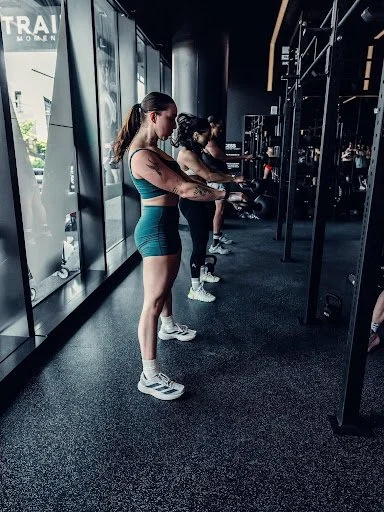
Mileage builds a runner's engine, but it does very little to build the strength that keeps that engine running injury-free week after week. Group fitness for runners fills exactly that gap, and it tends to work better inside a coached, group setting than it does as a solo lifting routine squeezed in between runs.
Here is how coached strength sessions actually complement a running plan, what to look for in a group format, common signs that your running would benefit from added strength work, and how to find a rhythm that supports your training instead of competing with it.
The Missing Piece in Most Running Plans
Most running plans are built almost entirely around mileage, pace targets, and recovery weeks, with strength work mentioned briefly, if at all. That gap leaves runners with excellent cardiovascular fitness and comparatively underdeveloped muscular strength, which is a mismatch that tends to show up as nagging injuries rather than sudden ones.
Group fitness for runners fills that gap directly, and it does so with more structure than most runners manage to build on their own. Coached sessions bring a level of planning that a solo lifting routine often lacks, because the coach is thinking about progression across weeks, not just picking exercises that sound useful on a given day.
Signs Your Running Would Benefit From Added Strength Work
A few common patterns tend to show up in runners who would benefit most from adding coached strength sessions. Recurring, low-grade aches around the same joint, especially the knees or hips, often point to a strength imbalance rather than a running mechanics problem alone. Strength training addresses that root cause directly, rather than just managing the symptom with more rest.
Another sign is a stride that feels noticeably less stable in the final miles of a long run, as fatigue sets in and form starts to break down. That kind of late-run instability usually points to underdeveloped hip and core strength rather than a lack of cardiovascular fitness, which is exactly the gap that group fitness for runners is designed to close.
A third sign is simply plateauing on pace despite consistent training. Runners sometimes assume the answer is always more mileage, when in some cases the missing piece is the muscular strength needed to actually apply more force with each stride.
What Coached Group Sessions Add
A coach watching form in real time is one of the most underrated benefits for runners specifically, because running-related compensations, like a collapsing knee or an unstable hip, tend to show up under load during strength work before they ever show up as pain on a run. Catching that early, with a coach correcting it, prevents small issues from becoming bigger ones.
Programming aligned to build strength steadily over several weeks also matters more than most runners expect. A single hard lifting session does very little for long-term durability. A repeating, progressive block, like the structured sessions at TRAIN Moment, builds strength gradually enough to actually stick, and predictably enough that runners can plan around it.
There is also a simple, human element that group training adds. Group energy pushes effort even on days when legs are tired from a hard running week, in a way that training completely alone rarely replicates. Runners who train in a group setting often describe showing up on days they would have skipped a solo gym session entirely.
What a Coached Session Actually Looks Like
A typical coached strength session for a group that includes runners starts with a movement-specific warm-up targeting hips, ankles, and the core, areas that take on a disproportionate amount of stress during running. From there, the session moves into the main programmed lift for that block, whether that is a squat variation, a hip hinge, or a pulling movement, with the coach walking the room and adjusting load and cues for each person.
Accessory work rounds out the session, often targeting single-leg stability or core control, both of which carry over directly to running form. The entire session is led by the coach from start to finish, so runners are not left guessing at what to do between exercises or how much weight is appropriate for a given lift.
Building Strength Without Losing Running Performance
The goal of strength work for a runner is not soreness for its own sake. It is building useful strength through compound lifts and stability work that translates directly to a more resilient stride. A session overloaded with unnecessary exercises or excessive volume can leave a runner too fatigued to perform their next scheduled run well, which defeats the purpose entirely.
Bi-weekly repeating cycles help runners track lift progress alongside race training in a way that feels connected rather than separate. Instead of two disconnected training plans running in parallel, the strength cycle and the running block can be viewed as two parts of the same overall goal, both aimed at getting a runner to race day feeling strong and durable.
Balancing lifting intensity around long runs and race weeks takes some coordination, but it is far easier inside a coached, programmed format than it is trying to build a lifting plan alone. A coach who understands the demands of a running schedule can help scale intensity appropriately during heavier training weeks and taper periods.
Finding the Right Rhythm
Two group strength sessions a week is a common and sustainable starting point for runners layering lifting onto an existing plan. That frequency provides enough consistent stimulus to build strength without overwhelming recovery from running-specific training.
Benchmark lifts, tracked on a repeating schedule, show runners whether the strength work is actually paying off, the same way a faster interval pace shows progress on the track. Seeing a hip hinge or a pulling movement improve over a training cycle gives concrete, motivating proof that the extra time in the gym is worth it.
Training with the same group also keeps accountability high during the parts of a training cycle when motivation naturally dips, whether that is deep into marathon buildup or during a stretch of bad weather. A scheduled class with familiar faces is easier to show up for than a solo gym session with nobody expecting you.
How This Differs From Generic Cross-Training Advice
A lot of generic cross-training advice for runners boils down to "do some strength work sometimes," without much detail on what to prioritize, how often to train, or how to progress over time. That vague guidance is a big part of why so many runners try strength training briefly, feel unsure whether it is helping, and quietly drop it after a few weeks.
Group fitness for runners, delivered through a coached and programmed format, replaces that vagueness with a specific plan. Instead of guessing which exercises might help, a runner is working through a structured cycle built around the movement patterns that most directly support running performance and injury resistance, with a coach tracking whether the plan is actually producing results.
Setting Realistic Expectations for the First Few Weeks
Runners new to coached strength training sometimes expect immediate, dramatic changes to how their running feels. In reality, the first few weeks are mostly about building comfort with new movement patterns and establishing a baseline on key lifts, rather than producing a noticeably different stride overnight.
The more meaningful changes tend to show up gradually, over six to eight weeks of consistent training, as strength gains from the programmed cycle start translating into better stability and less compensation during runs. Runners who stick with a coached format through that initial adjustment period are the ones most likely to notice the injury-prevention and performance benefits that make group fitness for runners worth the added time commitment.
Patience during those early weeks pays off. Trying to judge the value of strength training after a single session, or even a single week, misses how gradually these adaptations actually build, which is exactly why a repeating, programmed cycle matters so much more than a handful of unstructured gym visits.
Group Coaching Versus Training Alone
Plenty of runners have tried building their own strength routine at some point, usually with good intentions and a handful of exercises pulled from a running magazine or a video. Most of those routines fade out within a few weeks, not from lack of effort, but from the absence of structure, feedback, and any real progression plan.
A coached group setting solves each of those problems directly. Structure comes from the programming itself, feedback comes from a coach watching form during every session, and progression is built into the repeating cycle rather than left to guesswork. None of that requires a runner to know anything about strength training beforehand, which is exactly why group fitness for runners tends to outlast a solo routine by a wide margin.
There is also a practical scheduling benefit. A recurring class on the calendar is far easier to protect than an open-ended intention to "lift on my own sometime this week," which competes with every other flexible commitment a busy runner already has.
How Coaches Adjust Programming Around a Race Calendar
One of the more valuable, less visible parts of coached group fitness for runners is how a good coach adjusts programming around a race calendar without a runner having to manage that themselves. During a base-building phase, sessions can push load and volume more aggressively, since the running side of training is not yet at its most demanding.
As race day approaches and running volume peaks, a coach can dial back strength training intensity to protect recovery for key workouts and the taper period, while still maintaining enough of a training stimulus to preserve the strength gains built earlier in the cycle. That kind of context-aware adjustment is very difficult to replicate in a solo routine, since it requires understanding both strength programming and the demands of a running training block at the same time.
The Long-Term Payoff: Durability Across a Running Career
The benefits of coached strength training for runners compound over years, not just over a single training cycle. A runner who builds and maintains strength consistently tends to accumulate far fewer overuse injuries across multiple race seasons than one who relies on running volume alone, simply because the muscles and connective tissue supporting each stride are better prepared for repeated impact.
This long-term view matters more than any single race outcome. Runners who stay healthy year after year get to keep building on their running fitness continuously, while runners who cycle through repeated injuries lose training time that is difficult to make up later. Group fitness for runners, sustained over multiple years rather than a single season, is one of the more reliable ways to stay on the healthy side of that equation.
Coaches who see the same runners cycle after cycle also get to track that long-term trend directly, noticing when a lifter's benchmark numbers climb steadily year over year, which tends to correlate with fewer of the nagging setbacks that interrupt a running career built on mileage alone.
Bringing Strength and Running Together as One Plan
The most effective approach treats strength training and running as two connected parts of the same overall goal, rather than two separate pursuits competing for time and energy. A runner who views the weight room as directly supporting their next race, rather than as an unrelated obligation, tends to stay far more consistent with it over the course of a full training cycle.
Group fitness for runners, built on coached, programmed sessions, makes that connection easier to maintain, since the structure, the coaching, and the community all reinforce the same underlying goal every single week: building a stronger, more durable runner, one coached session at a time. Runners who adopt this mindset early tend to describe strength training less as a chore squeezed around their real training and more as a core part of how they approach every season of running that follows.
What to Look For When Choosing a Group Format
Not every group fitness class marketed toward general fitness is actually built with a runner's needs in mind. A few things are worth confirming before committing time to a specific gym. Does the format repeat and progress over multiple weeks, or does it reinvent itself daily with no connection between sessions? Does a coach lead the room in person, watching form throughout, rather than relying on a screen or a playlist to carry the class?
Is there a clear way to track progress on key lifts over time, so a runner can see whether the strength work is actually translating into measurable gains? And is the coaching staff willing to talk through how a runner's race calendar should shape their training, rather than treating every runner the same regardless of where they sit in a training cycle? A gym that checks each of these boxes is set up to genuinely support a running goal rather than simply offering strength training that happens to exist nearby, and asking these questions upfront saves runners from switching gyms partway through a training block.
Conclusion
Group fitness for runners works because it turns strength training into something structured, coached, and consistent, exactly what a running plan is usually missing on its own. Layering coached sessions onto an existing mileage base gives runners a more resilient stride and a body better equipped to handle the demands of race training.
TRAIN Moment offers coached group strength sessions with bi-weekly programming and benchmark lift tracking, welcoming runners of every level across Chicago, Milwaukee, and Charlotte. Sessions are led by a coach from start to finish, so cross-training stays purposeful instead of random. Start the two-week trial to see how coached strength sessions fit around your running schedule. For a deeper look at building a full cross-training approach in Charlotte specifically, see Strength Training for Runners: A Charlotte Guide to Cross-Training the Right Way.
FAQs
Can group fitness really help my running performance?
Yes. Coached strength sessions build the muscle and joint stability that support a more efficient, injury-resistant stride, which tends to carry over directly to running performance over time.
How do I fit lifting sessions around a running training block?
Two group sessions a week, spaced a day or two away from your hardest running workouts, is a common and sustainable approach that most runners can maintain through a full training cycle.
Will lifting interfere with my long runs?
Not when it is programmed thoughtfully. Sessions can be scaled around your running schedule so strength work supports your mileage instead of competing with it, especially during taper weeks.
What if I have never done group fitness before?
Coaches guide every session and scale each movement to your experience level, so first-timers are fully supported from day one, regardless of their running background.
Is this the same as working with a personal trainer?
No. This is coached group strength training, where a coach leads the full class through the same programmed session rather than working one-on-one.