
Rock Climber Strength Training
Transform Your Body, Transform Your Life – Explore Lincoln Park
Rock Climber Strength Training: The Complete Guide to Building Grip, Power, and Endurance
Climbing looks like a sport of balance and flexibility, but underneath every dyno, mantle, and crimp is a strength base that has to be built off the wall. Rock climber strength training is what turns a shaky, pumped-out session into a controlled, efficient climb, and it's the difference between plateauing at the same grade for months and steadily working your way up.
Whether you're bouldering on weekends or training for your first outdoor lead, a structured approach to strength work will do more for your climbing than simply logging more time on routes. This guide breaks down the core pillars of rock climber strength training, how to sequence them, and how to avoid the injuries that sideline so many climbers.
Grip and Forearm Strength: The Foundation of Every Climb is the single most climbing-specific quality you can train, and it's usually the first thing to fail mid-route. Your forearms fatigue faster than your legs or back because tendons recover more slowly than muscle tissue, which means grip work has to be programmed carefully rather than maxed out every session.
Hangboarding is the standard tool here. A simple protocol- 7 seconds on, 3 seconds off, for 5–6 reps per set, using an edge size that's challenging but not maximal- builds tendon and finger strength without overloading connective tissue. Beginners should start on jug-sized holds and progress to smaller edges only after several weeks of pain-free hangs.
Beyond hangboarding, climbers benefit from:
Farmer's carries with heavy dumbbells or kettlebells to build crush and endurance grip
Pinch block holds for thumb-opposed strength used on volumes and slopers
Wrist curls and reverse wrist curls to balance the forearm flexors against the often-neglected extensors, which reduces elbow tendinopathy risk
Rice bucket drills as a low-load warm-up or recovery tool between heavier sessions
Grip training should never happen on fully fatigued fingers. Schedule these sessions on non-climbing days or at the very start of a session, and always leave 48 hours between max-intensity hangboard sessions to let tendons recover.
Pulling Power: Back, Lats, and Core Integration
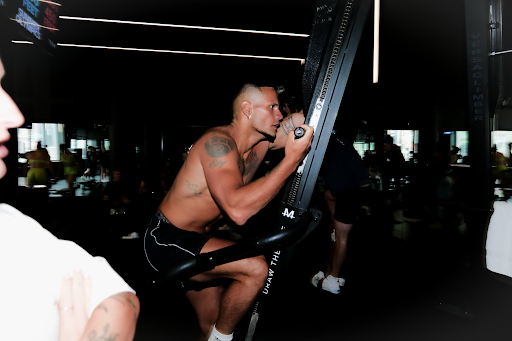
Climbing is fundamentally a pulling sport, and most of that pulling power comes from the lats, rhomboids, and rear delts working together with a braced core. Climbers who only train pull-ups in isolation often develop strength that doesn't transfer well to the angles and body positions found on real rock or plastic.
Key movements to build climbing-specific pulling strength:
Weighted pull-ups and lock-offs: hold at 90 degrees, 120 degrees, and full lockout to mimic the static positions used to reach the next hold
Front lever progressions, tuck, single-leg, and full lever variations build the shoulder and core stability needed for steep overhangs.
Single-arm rows and TRX rows train unilateral pulling strength, which matters because climbing rarely loads both arms symmetrically.
Deadlifts and Romanian deadlifts build posterior chain strength that supports heel hooks and high steps.
Core training deserves special attention in any rock climber strength training program, since a weak core forces the arms to compensate on overhangs and steep terrain. Hanging leg raises, dragon flags, and hollow body holds train the anti-extension strength climbers need to keep their feet on the wall.
Lower Body Power and Footwork Strength
New climbers tend to over-rely on their arms, but experienced climbers know that legs generate most of the power on a route. Strong quads, glutes, and hip flexors allow for higher steps, more controlled heel hooks, and explosive movements like dynos without wasting energy pulling through the arms.
Effective lower-body work for climbers includes:
Box step-ups at varying heights to replicate high-foot placements
Bulgarian split squats for single-leg strength and hip stability
Hip flexor and adductor mobility drills, since flexibility at the hip is often the limiting factor on high steps, not strength alone.
Calf raises to support toe-hooking and precise footwork on small edges
Recovery, Injury Prevention, and Periodization
The biggest mistake in rock climber strength training isn't a weak exercise selection; it's poor recovery planning. Fingers, elbows, and shoulders are high-injury zones in climbing because tendons adapt more slowly than the muscles pulling on them. Training too hard, too often, without deload weeks is the fastest way to end up with pulley strains or golfer's elbow.
A sustainable approach looks like this:
3–4 climbing/training sessions per week, with at least one full rest day between high-intensity finger sessions
A deload week every 4–6 weeks, dropping volume by 40–50% to let tendons and the nervous system recover
Antagonist training (push-ups, dips, shoulder external rotation) to balance the pulling-dominant nature of climbing and protect the shoulders
Warm-up protocols that include 10–15 minutes of light cardio, dynamic stretching, and easy climbing before any hard bouldering or hangboard work
Strength gains in climbing are slow and cumulative. Progress is measured in months, not weeks, and climbers who respect the recovery side of the equation consistently outlast those chasing quick gains through overtraining.
If you're looking for a place to build this kind of structured strength base with expert coaching rather than guessing your way through a program, TRAIN Moment offers coached strength sessions that translate directly to climbing performance, and their climbing strength calculator is a useful starting point for figuring out where your grip and pulling strength currently stand.
For climbers based on the North Side of the city, checking out strength training classes in Lincoln Park is a practical way to combine general strength programming with a coached environment close to home.
What's the most important strength quality for climbers to train?
Grip and forearm strength is the most climbing-specific quality to train, since it's usually the first thing to fail mid-route and takes longer to recover than other muscle groups.
How often should climbers train grip and forearm strength?
Grip work should be programmed carefully, not maxed out every session — leave at least 48 hours between high-intensity hangboard sessions to let tendons recover properly.
What exercises build climbing-specific pulling power?
Weighted pull-ups, lock-offs at multiple angles, front lever progressions, and single-arm rows build the kind of pulling strength that transfers to real climbing positions, more so than pull-ups trained in isolation.
How do I prevent common climbing injuries like tendon strains?
Prioritizing recovery, a deload week every 4–6 weeks, antagonist training to balance the shoulders, and proper warm-ups before hard sessions prevent the tendon-related injuries that sideline most climbers.
Is coached strength training helpful for climbers, or should I just climb more?
Structured strength work off the wall builds the tendon resilience, pulling power, and core stability that climbing alone doesn't develop. TRAIN Moment's Lincoln Park studio offers coached sessions that translate directly to climbing performance.