
Strength Training for Pickleball Players
Transform Your Body, Transform Your Life – Explore Lincoln Park
Strength Training for Pickleball Players: Build Power, Speed, and Staying Power on the Court
Pickleball looks easy until your legs are on fire after the third game and your shoulder is barking from that overhead smash. The sport asks for quick lateral cuts, sudden stops, explosive lunges, and repeated overhead and rotational movements all packed into short, high-intensity bursts. That combination puts real demand on your joints, connective tissue, and stabilizing muscles, which is exactly why strength training for pickleball players has become one of the fastest-growing requests we hear from members prepping for league play, tournaments, or just weekend games that don't leave them limping on Monday.
Below is a practical, four-part breakdown of what actually matters if you want to move better, hit harder, and stay off the sidelines.
Why Pickleball Players Need Strength Training
Pickleball is a stop-start sport built on quick direction changes, split-step reactions, and short sprints to the kitchen line. Unlike steady-state cardio, this kind of movement relies heavily on fast-twitch muscle fibers, tendon elasticity, and joint stability, none of which improve just by playing more matches. In fact, playing more without building the underlying strength is usually how overuse injuries creep in.
A structured strength program does three things competitive and recreational players both need:
Builds tendon and joint resilience in the shoulders, elbows, and knees, which absorb repeated impact from dinks, drives, and overhead shots
Improves rotational power through the hips and core, which is where most of your paddle speed actually comes from, not the arm
Increases lateral speed and deceleration control, so you can change direction hard without your knees or ankles paying the price
This is also why strength training for pickleball players looks different from a generic gym routine. It's not about maxing out on a bench press; it's about building strength that transfers directly to court movement.
Key Strength Training Exercises for Pickleball Performance
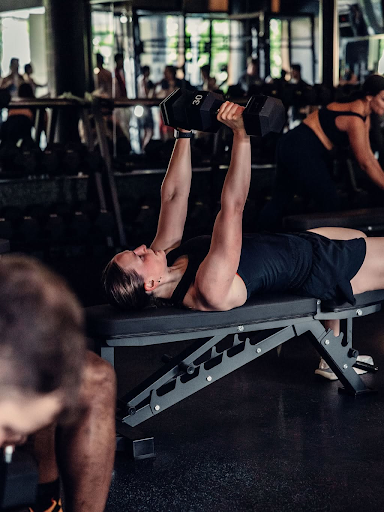
A smart pickleball-focused program hits four categories: lower-body power, rotational core strength, upper-body stability, and single-leg control. Here's what that actually looks like in a session.
Lower-body power and lateral speed
Goblet squats and split squats build the leg strength behind every lunge to the net. Lateral band walks and skater jumps train the side-to-side explosiveness pickleball constantly demands
Reverse lunges with a rotation add a layer of court-specific movement rather than just building raw leg strength in isolation. Rotational core strength.
Cable or band woodchoppers mimic the twisting motion of a forehand or backhand drive. Medicine ball rotational throws build explosive power through the trunk, which is where paddle speed originates
Dead bugs and Pallof presses train anti-rotation strength, protecting the lower back during repeated swings.
Upper-body and shoulder stability
Face pulls and band pull-aparts counterbalance the repetitive forward shoulder motion of overhead shots.
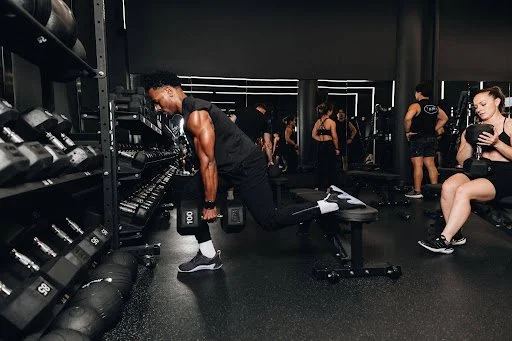
Dumbbell rows build the pulling strength that supports paddle control and reduces shoulder strain.
Light overhead presses, done with control, build shoulder endurance without overloading the joint.
Single-leg control and balance
Step-ups and single-leg Romanian deadlifts train the stability needed for quick recovery steps. As
Balance work on an unstable surface improves ankle and knee control during sudden stops.
Injury Prevention Through Strength Training
The most common pickleball injuries- tennis elbow, rotator cuff strain, Achilles issues, and knee tweaks-are almost all overuse or stability problems, not one-time accidents. That means they're largely preventable with the right strength work.
A few specific habits go a long way:
Prioritize eccentric strength (the lowering phase of a lift) for the shoulders and knees, since this is where most soft-tissue injuries occur during rapid deceleration
Don't skip grip and forearm work; light wrist curls and grip squeezes help offset the repetitive strain that leads to elbow pain.
Train balance and ankle stability, since most on-court falls and rolled ankles come from a lack of proprioceptive control, not weak muscles
Build in recovery days, since tendons adapt slower than muscles and need extra time between hard sessions. This is really the core of why strength training for pickleball players should be viewed as season-long maintenance, not a pre-tournament crash course. A consistent two-to-three-times-a-week routine, done over months, does more for your court longevity than any single intense workout ever will.
If you're looking for coached, small-group sessions that build this kind of injury-resistant strength while keeping workouts efficient, TRAIN Moment's Lincoln Park studio is a good starting point. You can check the current class times on our schedule page or grab a two-week trial to test it out before committing.
What type of strength training is best for pickleball players?
A program that combines lower-body power, rotational core work, and shoulder stability is most effective, since these are the qualities pickleball demands most: quick lateral cuts, paddle speed generated through the hips, and repeated overhead motion.
How many days a week should pickleball players strength train?
Two to three sessions a week, spaced around match days, is enough to build strength and resilience without interfering with recovery before your next game.
How many days a week should pickleball players strength train?
Most people see solid results training two to four times per week, allowing at least one rest day between sessions that stress the same movement patterns heavily.
Do I need to lift heavy weights to improve my pickleball game?
No. The goal is building strength that transfers to court movement, not maxing out lifts. Bodyweight and moderate-load exercises like split squats, band walks, and rotational throws do more for on-court performance than heavy barbell work.
What strength exercises help prevent common pickleball injuries?
Exercises that build eccentric strength in the shoulders and knees, grip and forearm endurance, and ankle/balance stability address the most common pickleball injuries — tennis elbow, rotator cuff strain, and rolled ankles.