
Group Strength Training in Charlotte: Why Structured Programming Beats Random Workouts
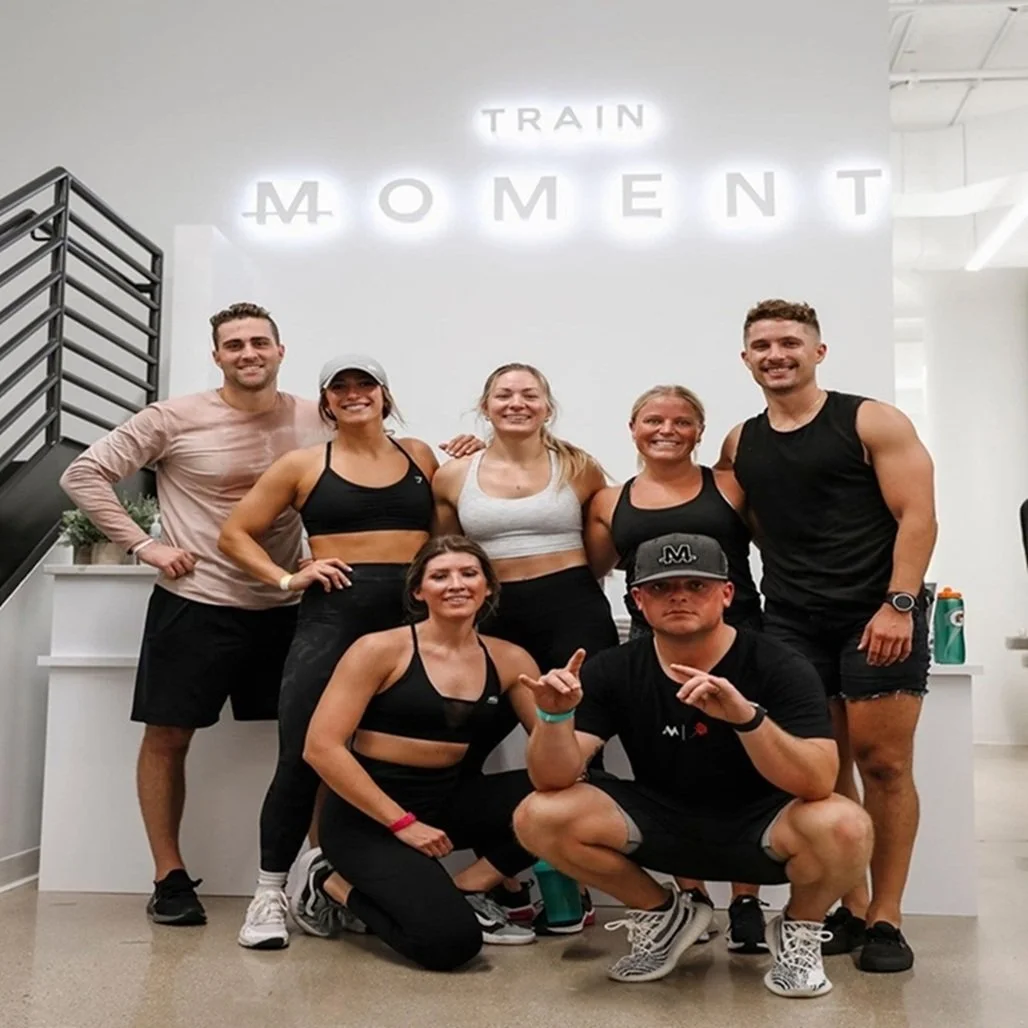
Most people who've been going to the gym for months without seeing real results aren't lazy. They're not undisciplined. They're just winging it. Group strength training in Charlotte gives you something that winging it can't: a program that builds on itself week after week, with a coach managing the process and a community keeping you honest.
Random workouts feel productive in the moment. They're often intense, and intensity can feel like progress. But intensity without structure is one of the most common reasons people plateau, burn out, and eventually stop going altogether.
What "Random" Workouts Are Actually Costing You
There's a popular idea in fitness called muscle confusion. The claim is that constantly changing your workouts keeps your muscles guessing and prevents adaptation. It sounds logical. The science doesn't support it.
Muscle confusion as a concept misunderstands how adaptation works. Your muscles don't grow because they're surprised. They grow because they're subjected to progressively greater demands over time. When you're constantly switching exercises, rep ranges, and loading schemes, you never give your body long enough with any single stimulus to fully adapt to it. You create soreness, which feels like progress, but soreness is not the same thing as strength or muscle development.
Progressive overload, the actual driver of strength and hypertrophy, requires repetition. You need to come back to the same movements and add something: more weight, more reps, better technique, shorter rest. Without that progression, you're exercising. You're not really training.
This is exactly where random workout culture falls apart. A different workout every day might keep you entertained, but entertainment and adaptation are two different things. If you've been training hard and still feel like you're not getting anywhere, the programming, or the lack of it, is usually the reason.
What Structured Programming Looks Like in Practice
Structured programming has a few defining features that separate it from a random collection of workouts.
First, it repeats. Not indefinitely, but long enough for your body to adapt and for you to make measurable progress within that cycle. At TRAIN Moment, programming repeats bi-weekly. You come back to the same movements and have a real opportunity to improve on them, to add weight, to clean up your form, to move through the reps with more control than you did two weeks ago. That's progressive overload in action.
Second, it centers on compound movements. Squats, deadlifts, bench press, overhead press, rows, and pull variations. These movements recruit multiple muscle groups simultaneously, produce the greatest hormonal and strength response, and build the kind of functional capability that carries over into real life. Isolation machines and random exercise pairings don't produce the same return on your time investment.
Third, it gives you numbers to chase. Benchmark lifts are a core part of the TRAIN Moment model. Your squat max, your deadlift, your press, these numbers get tracked over time. When they move up, you know the program is working. When they stall, the coach knows what to adjust. This is the difference between training with intention and just showing up and sweating.
The Coaching Layer That Changes the Outcome
A program is only as good as its execution. This is where coaching earns its value.
You can find structured programs online. You can download templates, watch YouTube tutorials, and follow a twelve-week plan someone else designed. The gap is that no one is watching you do it. No one is correcting the hinge in your deadlift before it becomes a back injury. No one is pushing you to add five pounds when you're leaving too much in the tank. No one is tracking whether you're actually progressing or just going through the motions.
A coached group session closes that gap. The coach manages your form in real time, cues your movement, adjusts your load when needed, and ensures the program is doing what it's supposed to do. That's not a small thing. It's the variable that separates people who train for years and get stuck from people who consistently make progress.
In a group setting, you also get the benefit of a coach managing multiple people simultaneously, which means you're not waiting for attention. The sessions are built so the coach can give meaningful feedback to each person within the flow of the class. You're not invisible, and you're not waiting.
Community as a Real Training Variable
The people around you while you train matter more than most people acknowledge.
Social facilitation research confirms what most experienced gym-goers already know intuitively: you work harder when other people are in the room. Not harder in a grinding, ego-driven way, but harder in a sustainable, consistent way. The collective energy of a group session raises the floor for everyone. You push through a set you might have cut short. You come in on a day you'd have skipped if it were just you and an empty gym.
Charlotte's South End is growing fast, and with that growth comes a fitness culture that's increasingly serious about what it invests in. People here are looking for more than a gym membership. They want accountability, results, and a place where showing up feels worth the effort.
An all-levels environment is part of what makes this work. When you know that beginners and experienced lifters train in the same space, at their own level, the intimidation barrier drops. New members stop worrying about whether they belong, and experienced members appreciate that the coaching and programming are sophisticated enough to keep challenging them.
Conclusion
group strength training in Charlotte works because it replaces guesswork with structure, isolation with community, and vague effort with numbers you can actually track. The plateau problem that frustrates so many people training on their own disappears when the programming is designed to build, and the coaching is consistent enough to keep you executing it well.
TRAIN Moment Charlotte, South End
TRAIN Moment just opened in Charlotte's South End, bringing the same coached group strength model from Chicago and Milwaukee. Bi-weekly programming, benchmark lift tracking, compound barbell work, expert coaches, and an all-levels community that includes everyone from first-timers to seasoned athletes. Full-service locker rooms and a professional setup built for serious training.
Grab your 2-week free trial at trainmoment.com/trial.
FAQs
What is group strength training, and how does a typical session work?
Group strength training is a coached class format built around barbell and compound movements with intentional programming. A typical TRAIN Moment session includes a warm-up, skill or technique work, the main strength block (usually centered on a primary lift like squat or deadlift), and accessory movements. A coach leads and manages every part of the session.
Is structured programming necessary if I'm just starting?
It's actually more important for beginners than for experienced lifters. When you're new to training, every session has the potential to adapt, but only if you're executing movements correctly and progressing consistently. A coach with a structured program gets you further in three months than three months of random gym visits.
How is group strength training different from CrossFit?
TRAIN Moment focuses on strength development through barbell work and progressive overload. The goal is to build strength, muscle, and movement quality over time, not to create metabolic conditioning workouts or competitive fitness challenges. Programming is methodical and repeats bi-weekly rather than varying daily for variety's sake.
What should I expect from my first class?
Coaches at TRAIN Moment work with new members to establish a starting point on each lift. You'll be coached through the movements, given a load appropriate for your level, and welcomed into a group that includes people at every experience level. You don't need to know anything going in.
How quickly can I expect to see results from structured group training?
Strength improvements typically show up within the first four to six weeks of consistent training. Noticeable changes in body composition follow over two to three months. The more consistent you are, the faster those benchmarks move.