
Building Muscle with Group Training in River North: What the Science Actually Says
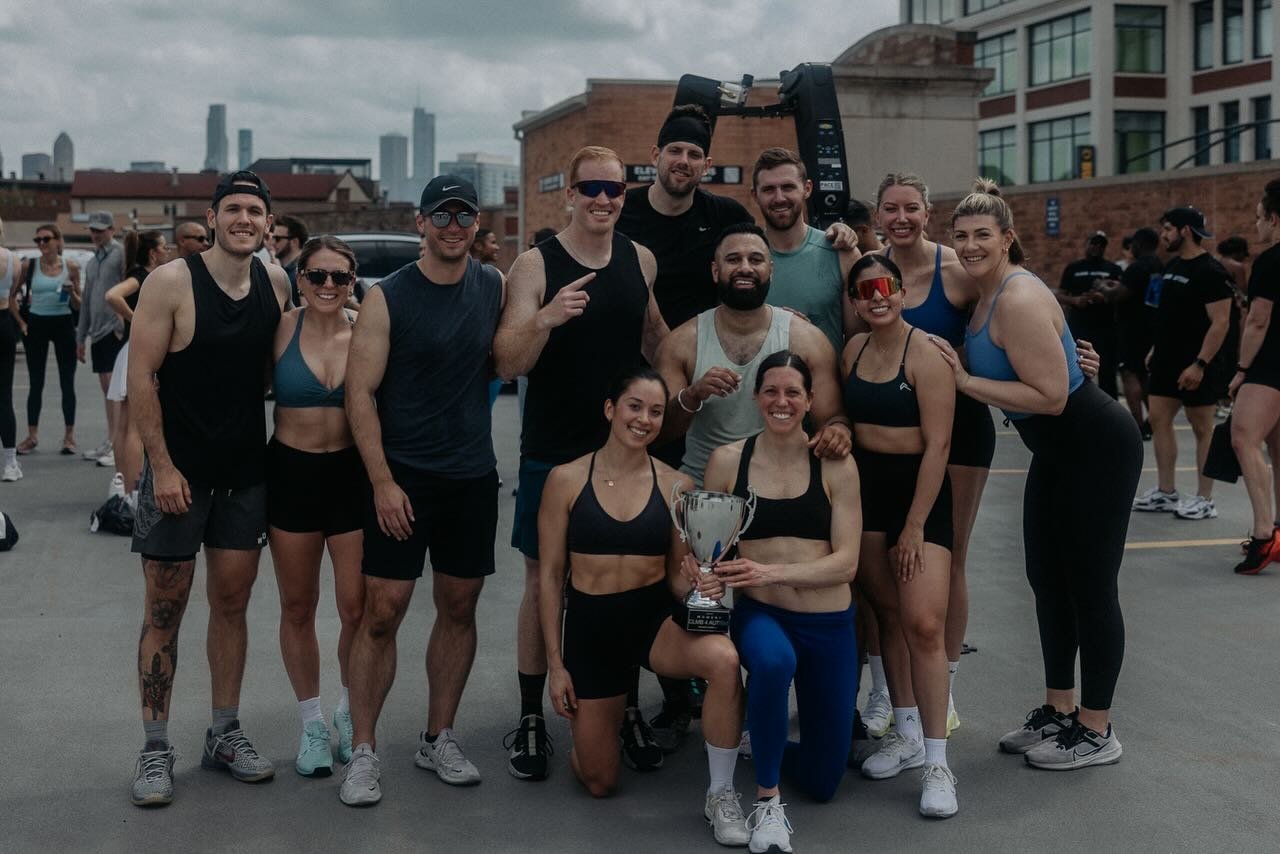
There's a stubborn belief in fitness culture that building muscle requires a custom plan, a dedicated personal coach, and complete isolation from other people's workouts. The science doesn't back that up. Building muscle with group training isn't a compromise. For most people, it's actually the more sustainable path to consistent, measurable progress.
Here's what the research says, and why it matters for any group trainingin River North.
What Muscle Growth Actually Needs
Before you can evaluate any training format, it helps to understand what muscle growth actually requires. Strip away the noise, and the fundamentals are straightforward.
Progressive overload is the core mechanism. Muscle grows when it's subjected to increasing levels of stress over time, whether that means more weight, more reps, better technique at the same load, or shorter rest with the same volume. Your body adapts to what you demand of it. The moment demand stops increasing, adaptation slows.
Consistency is the other non-negotiable. A brilliant program followed for three weeks does less than a solid program followed for six months. The body needs repeated, cumulative stimulus. One-off intense sessions don't build muscle the way regular, structured training does.
Volume matters too, but within reason. Research on hypertrophy (muscle growth) points to a moderate weekly volume of challenging sets per muscle group, with compound movements doing most of the heavy lifting. Squats, deadlifts, bench press, overhead press, rows, and pull variations cover the majority of what your body needs.
None of these requirements mentions solo training. They mention load, repetition, consistency, and compound movement. A well-designed group program delivers all of them.
How Group Training Delivers the Right Stimulus
The question isn't whether you can build muscle in a group setting. The question is whether the group program is built around the principles that actually produce results. Many group fitness formats aren't. They prioritize variety, sweat, and novelty over progressive overload and measurable strength development.
Structured group strength training is different.
At TRAIN Moment, programming repeats bi-weekly. That cycle is intentional. Your body needs repeated exposure to the same movement patterns under increasing demand to adapt. When programming changes every single class, there's novelty but no progressive overload. Bi-weekly repetition lets you add weight, clean up your form, and actually measure improvement from one cycle to the next.
Benchmark lifts are a core part of the model. You track your squat, your deadlift, your press. These numbers move over time. That movement is the evidence of muscle development, not a number on a scale or how sore you feel after a session.
The compound lifts that anchor each session, squats, deadlifts, presses, and pulls, hit multiple muscle groups simultaneously. This is time-efficient, mechanically sound training. Each session creates a significant enough stimulus to drive adaptation without requiring three hours in the gym.
The Social Side Has a Scientific Explanation
The social environment of group training isn't just a nice bonus. It has a measurable effect on performance, and therefore on results.
Social facilitation is a well-documented phenomenon in psychology. First described in the late 1800s and studied extensively since, it refers to the tendency for people to perform better on effort-based tasks in the presence of others. When you're aware that other people are in the room working hard, your own arousal level rises. For practiced movements, that heightened arousal translates to greater output.
In practical terms, you push harder in a group than you do alone. You finish the set, and you might have cut short. You add weight you might have talked yourself out of. You show up on the days you might have skipped. These aren't dramatic individual differences, but they compound over weeks and months into real, measurable gains.
Accountability functions alongside this. Members who train in groups show significantly higher adherence rates than solo trainees. Adherence, more than any other variable in a reasonable training program, drives long-term results. The best program in the world doesn't work if you only follow it some of the time.
Where Group Training Has Limits, and Where It Doesn't
It's worth being honest here. Group training isn't identical to a fully individualized program. If you have a specific injury, a sport-specific goal, or a very unusual starting point, some aspects of the program may need to be adapted.
In practice, a good coach handles this within the session. TRAIN Moment coaches manage form, adjust loads, and modify movements for individual members during class. You're not invisible in the group. The coaching attention is real, even if the program is shared.
The gap between group and individual programming is much smaller than most people assume, especially for the broad population of people who want to get stronger, build muscle, move better, and feel more capable. For that goal, the fundamentals are universal, and a well-coached group session delivers them reliably.
Where group training clearly does not have limits: consistency. Coached group sessions, done regularly, to build muscle. The data support it. The mechanism is the same as any other effective strength training program. Load, progression, compound movement, recovery, and repetition over time.
Conclusion
Building muscle with group training isn't a second-best option. When the programming is structured, the coaching is real, and the compound movements are front and center, group strength training drives the same physiological adaptations that any effective program would. The added layer of community and accountability makes the consistency that results easier to maintain, not harder.
TRAIN Moment River North
TRAIN Moment runs coached group strength sessions in River North, built on bi-weekly programming, compound lifts, and benchmark tracking. Coaches manage form, adjust loads, and keep every member progressing, regardless of where they start. Full-service locker rooms, an all-levels community, and a structure built for real results.
Start your 2-week free trial attrainmoment.com/trial.
FAQs
Can you actually build muscle in a group training class?
Yes, provided the program is built around progressive overload and compound lifts, not just variety for its own sake. Group strength training at TRAIN Moment is specifically designed to drive muscle development through bi-weekly programming cycles and benchmark lift tracking.
How long does it take to see results from group strength training?
Most people notice improved strength and better movement within four to six weeks of consistent training. Visible muscle development typically follows at the eight to twelve week mark, depending on training frequency, sleep, and nutrition.
What lifts are included in a group strength session?
TRAIN Moment sessions are built around compound barbell movements: squat, deadlift, bench press, overhead press, and pulling variations, including rows and pull-ups. These movements produce the greatest stimulus for muscle growth and functional strength.
How often should I train to build muscle effectively?
Most research points to two to four sessions per week as the effective range for muscle development. Training more frequently than you can recover from produces diminishing returns. The TRAIN Moment programming is designed with recovery in mind.
Is group training or personal training better for muscle growth?
The training stimulus is what drives muscle growth, not the format. A well-designed group program with real coaching delivers the same physiological requirements as individualized programming. Group training adds accountability and community, which directly supports the consistency that makes any program work.