
Strength Training Program for Athletes
Transform Your Body, Transform Your Life – Explore Lincoln Park
Strength Training Program for Athletes at TRAIN Moment
Every athlete wants to run faster, jump higher, hit harder, and stay healthy through a long season. Much of that is built in the gym, but only when the work is planned. At TRAIN Moment, we believe a well-built strength training program for athletes turns raw effort into measurable performance. Our coached sessions give competitive and recreational athletes a clear plan, expert eyes on every rep, and a room full of people pushing in the same direction.
Why Athletes Need a Structured Strength Program
Talent and practice take an athlete far, but strength is the quality that lets everything else show up. Stronger muscles and tendons produce more force against the ground, absorb impact more safely, and hold up better when fatigue arrives late in a game. That is why sprinters, swimmers, rowers, field players, and endurance athletes all benefit from time under a barbell.
Random workouts rarely deliver these gains. Doing a different circuit every day feels productive, yet it makes progress hard to track and easy to stall. A structured plan works differently. It sets a clear target for each phase, chooses the lifts that serve that target, and raises the demand in small, planned steps. The body adapts because the stimulus is specific and repeated.
Structure also protects athletes from two common mistakes: doing too much too soon and doing too little to matter. Sports already load the joints with repetitive motion. Strength work should balance that load by building the muscles that stabilize the hips, shoulders, knees, and trunk. When those areas are strong, athletes tend to move better, recover faster, and spend more time competing instead of rehabbing.
Building the Base with Compound Lifts and Progressive Overload
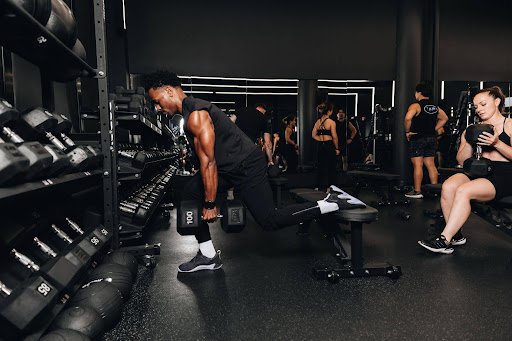
The foundation of any effective plan is a small set of big movements done well. Squats, deadlifts, presses, rows, lunges, and carries train many muscles at once and carry over to nearly every sport. Before adding load, our coaches look at how each athlete moves. Hip mobility, shoulder position, foot pressure, and trunk control all shape how safely a lift can be loaded, so technique comes first, and weight follows.
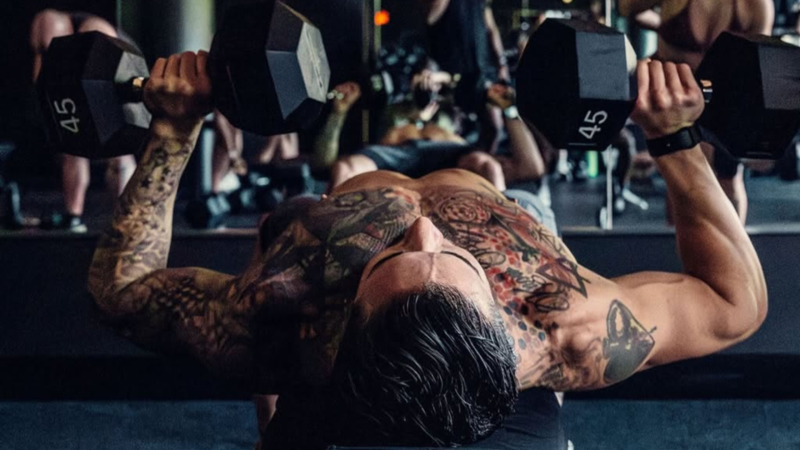
Once movement is sound, progression takes over. The principle is simple. To get stronger, the body needs a slightly bigger challenge over time, through more weight, more repetitions, better tempo, or tighter rest. Tracking those numbers turns training from guesswork into a clear record of improvement. See how our approach to progressive overload training in Chicago ties every session to measurable progress, so athletes always know whether the plan is working.
As the base grows, we layer in tempo work, single-leg exercises, and core stability. Unilateral training exposes side-to-side imbalances that a two-legged squat can hide. Bracing and anti-rotation drills teach the trunk to transfer force between the lower and upper body, which matters in throwing, striking, cutting, and jumping. Strong basics make advanced training safer and far more productive.
A strong base is the starting point, not the finish line. The second layer of a good strength training program for athletes connects the weight room to the demands of the sport. A pitcher needs shoulder health and rotational power. A wrestler needs grip, pulling strength, and the ability to produce force from awkward positions. A distance runner needs stiff, resilient legs that hold form when tired.
Because these needs differ, TRAIN Moment offers focused paths for different athletes. Runners can explore strength training for runners to see how lifting supports stride power, running economy, and durability. Grapplers can look at strength training for wrestlers to learn how the weight room feeds hip drive and pulling strength on the mat. Overhead athletes can visit strength training for baseball pitchers for a plan that respects the shoulder and elbow while building the legs and core behind every pitch. Athletes chasing hybrid races can also check out Hyrox training in Chicago.
Planning the Season and Training Alongside a Community
Athletes do not train the same way all year, and their programs should not either. In the off-season, the focus is on building strength and size and fixing weak links, because time and energy are plentiful. As pre-season approaches, volume comes down while intensity and power go up. During the competitive season, the goal shifts to maintaining strength with shorter, sharper sessions that leave athletes fresh for practice and games. Sleep, nutrition, and planned recovery weeks tie the whole cycle together.
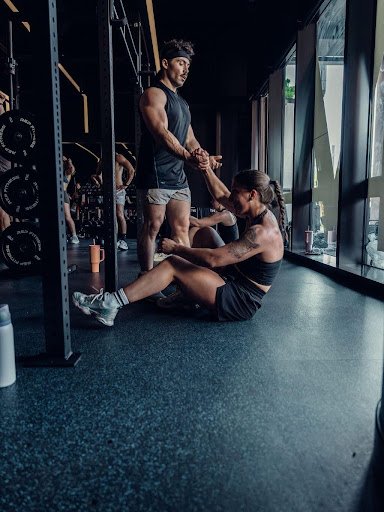
This rhythm is easy to draw on paper and hard to follow alone. Coached group training makes it manageable. At TRAIN Moment, trainers scale each movement to the individual, so a high school lacrosse player, a weekend triathlete and a masters cyclist can share the same room and still get the right challenge. The energy of the group also keeps effort high on the days when motivation dips.
If you want to feel the difference, book a 2-week trial and experience the coaching firsthand. You can also check the class schedule to find sessions that fit around practice, work, and school. Our team will help you shape a plan around your sport and your goals.
What does a strength training program for athletes include?
A complete plan includes a movement assessment, foundational compound lifts, progressive overload, power work, single-leg and core training, and a schedule that changes across the off-season, pre-season, and in-season phases.
How many days a week should athletes lift?
Most athletes do well with two to three sessions a week, adjusted for practice load, competition, and recovery. In season, two shorter sessions are often enough to hold onto strength.
Will lifting make me slower or too bulky?
No. Well-programmed strength work improves force production and sprint speed. Size depends on training volume, nutrition, and goals, and coaches can shape the plan to keep your body weight where your sport needs it.
Can I strength train during the competitive season?
Building strength around joints, improving landing and movement mechanics through power training, and including proper recovery all reduce the strain placed on the body during grappling exchanges and striking impact.
Do I need to be an elite athlete to train at TRAIN Moment?
Not at all. Sessions are coached and scaled to each person, so beginners, recreational competitors, and experienced athletes can train together with weights and progressions that suit them.