
How To Choose a Gym in Lincoln Park That Programs for Progress, Not Just Sweat
Most gyms sell you access. You pay, you walk in, and the rest is on you. That model works fine until you realize months pass and your strength looks the same. If you want a gym in Lincoln Park that actually moves you forward, the thing to look for is not more equipment or a flashier floor. It is programming, the plan that decides what you do, when you do it, and how you build over time.
Sweat feels like progress, but it is not the same thing. Plenty of workouts leave you drenched and go nowhere. Here is how to tell the difference and choose a gym that trains you with intention.
Access Versus Programming: The Difference That Matters
A membership gets you through the door. Programming gets you stronger. That gap explains why two people can train the same number of hours and end up in completely different places. One follows a plan that builds week to week, the other strings together random workouts that never connect.
Random training stalls because strength responds to structure. Your body adapts to stress, then needs a slightly greater stress to keep adapting. Without a plan that tracks where you have been and where you go next, you keep repeating the same effort and wonder why the results dry up. Real programming maps that progression for you, so each session stacks on the last.
A membership opens the door, programming drives the results.
Random workouts feel productive but rarely build lasting strength.
Structured programming connects every session into steady progress.
Picture two people who both train four times a week for six months. The first follows whatever feels right that day, a few machines, some random sets, and a different workout every time. The second follows a program that builds squats, presses, and pulls on a planned cycle. At the end of six months, the second person has added real weight to every major lift while the first looks about the same as when they started. Same effort, same hours, completely different outcome. The plan is the variable that changed everything, and it is the thing a good gym in Lincoln Park gives you.
What to Look For in a Lincoln Park Gym
Once you know programming matters, the search gets easier. Prioritize coached sessions over solo floor time, because a coach catches the form breakdowns and load mistakes that quietly hold you back. Look for a program that builds week to week instead of a daily workout that resets to zero every session. And insist on a clear way to measure whether you actually improve.
A strong Lincoln Park gym also handles a mixed room well. Beginners and experienced lifters should train the same movements at loads that fit each of them, so everyone progresses without anyone getting lost. That kind of scalability is a sign that the programming runs deep.
Coached group sessions over unsupervised solo time.
Programming that builds across weeks, not isolated daily workouts.
A clear, trackable measure of your progress.
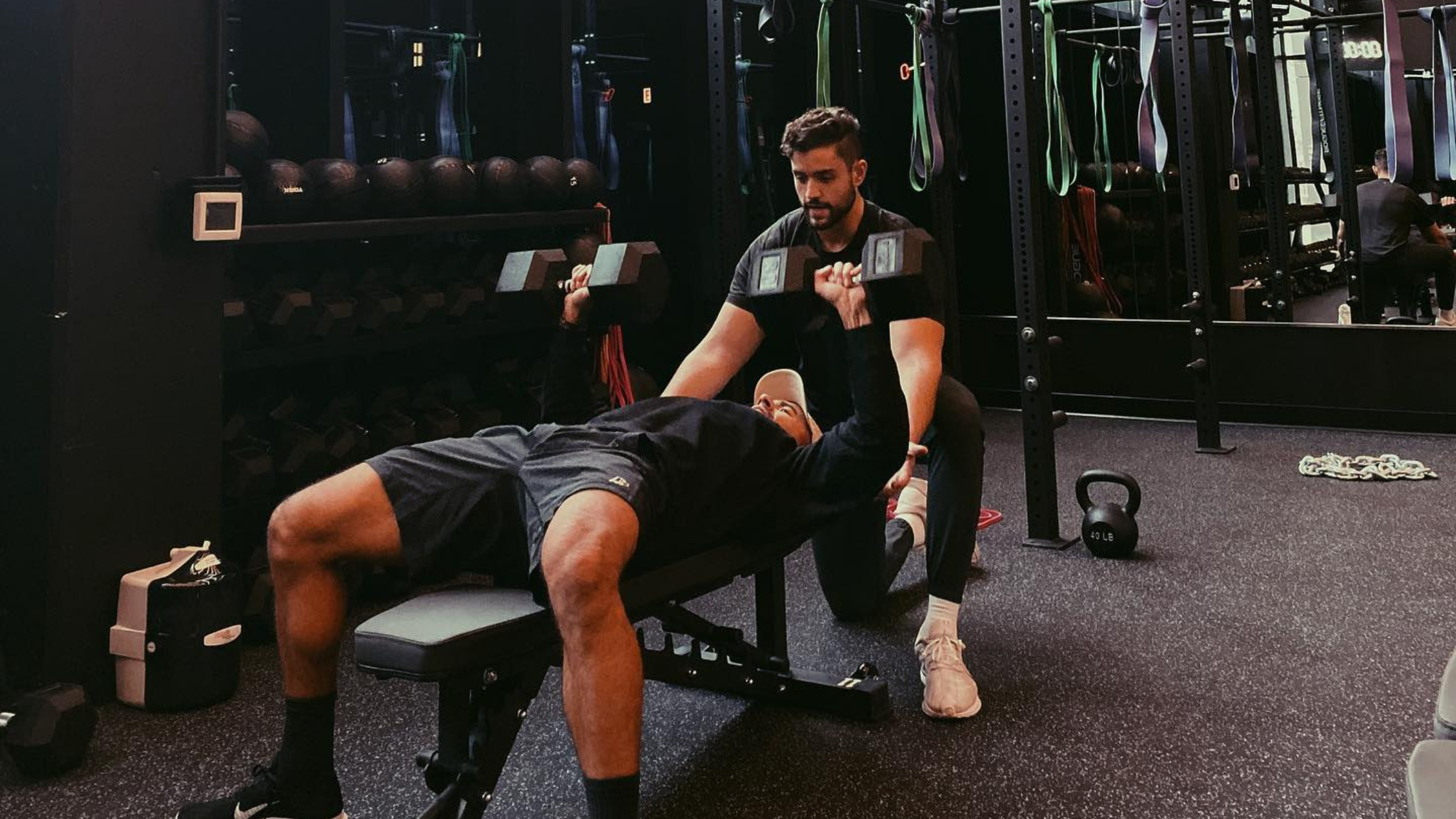
Real coaching shows up in the small moments. A coach notices when your knees cave on a heavy squat, when your back rounds on a deadlift, or when you leave reps in the tank because the load feels intimidating. They step in, fix the issue, and adjust the weight so you train hard and stay healthy. Those corrections add up to faster progress and fewer setbacks. A gym that leaves you alone on the floor cannot offer any of that, no matter how nice the equipment looks.
Why Progressive Overload Needs a Plan
Progressive overload is the engine behind every strength gain you have ever made. It means gradually asking your body to handle more, whether through heavier loads, more reps, or better control. The catch is that overload only works when it follows a plan. Add too much too fast, and you stall or get hurt. Add too little and nothing changes.
A smart program paces that progression for you. When sessions repeat on a predictable cycle, you can return to the same lifts, add a little, and build on exactly where you left off. That repetition is not boring; it is the whole point. You cannot overload a movement you only touch once in a while, so a gym that repeats and refines its programming sets you up to actually get stronger.
Strength comes from steady, planned increases in load and volume.
Repeating programming lets you build on your last session.
Benchmark lifts show whether the overload is working.
Here is what that looks like in practice. Say your program repeats on a two-week cycle. The first time through, you squat a given weight for your sets and log it. Two weeks later, you face the same lift, and now you add a small amount of weight or squeeze out an extra rep. Your body remembers the last round and meets the slightly harder demand. Repeat that across months, and the small jumps stack into a major change. You cannot pull that off with workouts that never repeat, because there is no baseline to build on. Repetition is not a sign of a boring program; it is the mechanism that makes overload possible.
Questions to Ask Before You Sign Up
Before you commit to any gym in Lincoln Park, a short conversation tells you most of what you need to know. Ask who writes the programming and how often it changes. Ask whether a coach leads every class or whether you are mostly on your own. And ask how the gym handles a room full of different experience levels, because the answer reveals how much thought goes into the training.
A gym that programs for progress answers these questions easily and proudly. A gym that only sells access tends to get vague. Trust the clarity.
Pay attention to how the gym talks about results, too. A place built around progress will mention benchmarks, programming cycles, and coaching without you having to dig for them. A place built around access will steer the conversation toward amenities, hours, and equipment counts. None of those things make you stronger on their own. The training does. When the staff lights up talking about the program and how clients progress through it, you have found the right kind of gym.
Who writes the programming, and how does it progress?
Do coaches lead every class?
How does the gym handle different experience levels in one room?
Choosing a Gym in Lincoln Park That Actually Delivers
The best gym in Lincoln Park is not the one with the most machines or the longest hours. It is the one that programs your training with purpose, coaches you through it, and shows you the proof in your numbers. Look past the sweat and ask what the plan is. When the answer is clear, structured, and built to progress, you have found a place that will actually make you stronger.
Train With Us in Lincoln Park
TRAIN Moment Lincoln Park is built around exactly this idea. You get coached group sessions, programming that repeats bi-weekly so you can keep adding to your lifts, and benchmark tracking that turns progress into something you can see. The community spans every level, from first session to serious athlete, and the full-service locker rooms make training fit your day. Ready to train with a plan? Try our 2-week new client trial and feel what programmed progress does.
FAQs
What makes a strength gym actually good?
A good strength gym combines structured programming, real coaching, and a way to track progress. Equipment and hours matter far less than whether the training has a clear plan behind it.
Is group training effective for building strength?
Very. Group strength training pairs a coach with a structured program, so you get expert guidance plus the accountability of a room full of people. Most lifters progress faster in that setting than they do training alone.
How long until I see strength gains?
Many people feel stronger within a few weeks and see clear gains in their benchmark lifts within a couple of months. Consistent training on a progressive plan is what drives the timeline.
Can beginners keep up in a coached class?
Yes. Coached sessions scale every movement to your level, so beginners train the same lifts at lighter loads while a coach guides form. You progress at your own pace inside the same room.
How many days a week should I train?
Three to five sessions a week work well for most people, with at least one full rest day for recovery. The right number depends on your goals and how your body feels.