
How Strength and Conditioning Gyms in Chicago Build Benchmark Lifts That Stick
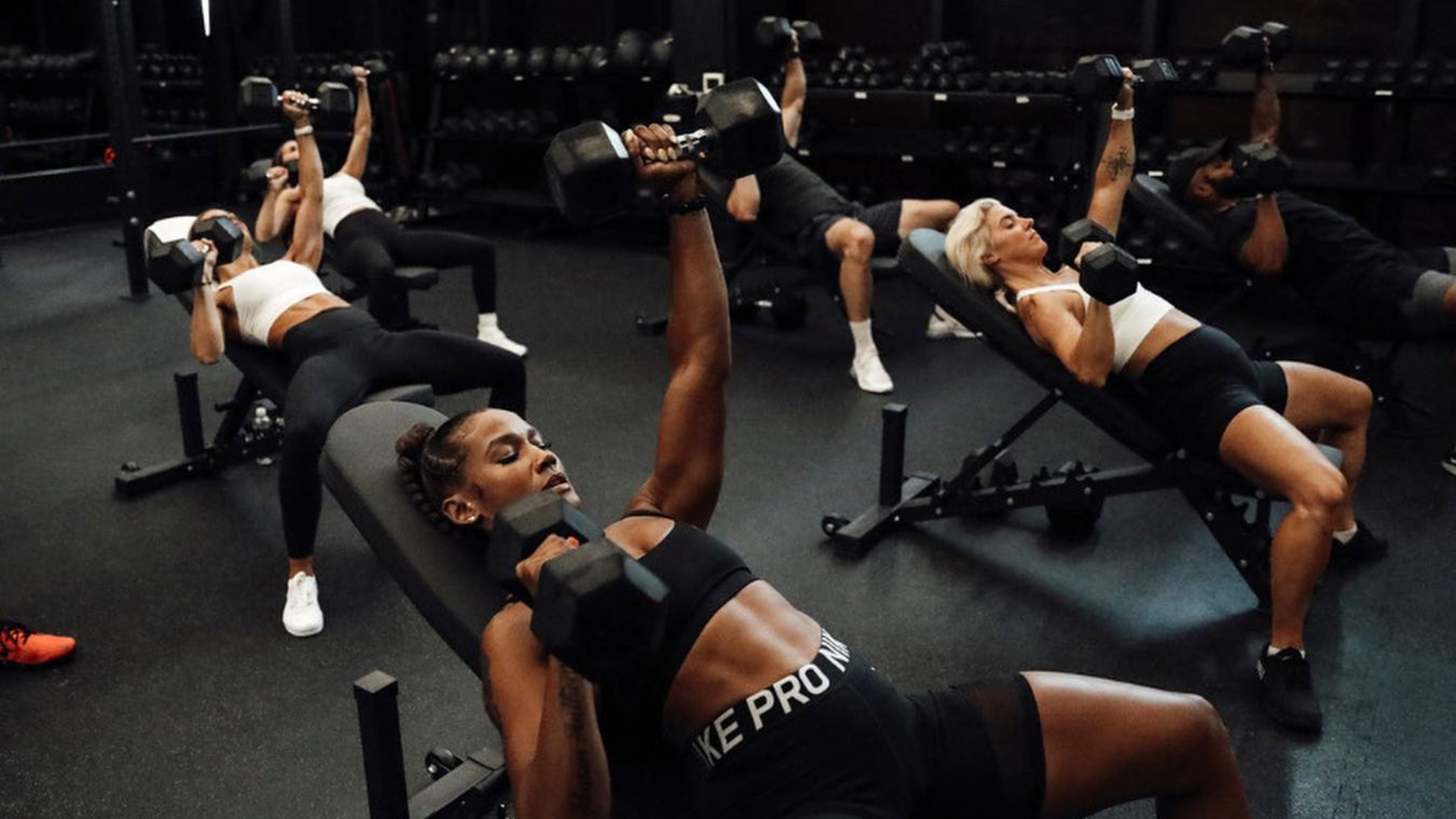
Plenty of people lift, but few actually track. They train hard, chase a good pump, and leave without any real record of whether they got stronger. The strength and conditioning gyms in Chicago that get the best results do something different. They build training around benchmark lifts, repeatable tests of strength that turn effort into numbers you can watch climb.
A benchmark gives your training a scoreboard. Instead of guessing whether the work pays off, you see it. Here is how the strongest gyms in the city build benchmarks that stick, and why that approach beats chasing a daily sweat.
What a Benchmark Lift Actually Is
A benchmark lift is a movement you test, retest, and use to measure real strength over time. Think of a back squat, an overhead press, or a deadlift. You log your numbers, train the movement on a plan, then test again later to see how far you have come. The lift itself becomes the proof.
This beats chasing a daily pump because a pump fades by dinner and tells you nothing about progress. A benchmark sticks around. It keeps your training honest because you cannot fool a number, and it gives every session a clear target to build toward.
A repeatable test of strength, like a squat, press, or deadlift.
Benchmarks beat chasing a daily pump that disappears by evening.
Numbers keep your training honest and focused.
Benchmarks are not limited to the big barbell lifts either. Vertical pulling, the pull-up and chin-up, makes an excellent benchmark because progress shows up clearly. You might start with assisted reps, then unassisted singles, then full sets, then added weight. Each step is a number you can see and feel. Tracking a movement like that alongside your squat, press, and deadlift gives you a full picture of your strength, from your legs to your back, and keeps every part of your training pointed at something concrete.
How Coaching Turns Effort Into Progress
Effort alone does not build a strong benchmark. Direction does. A coach catches the small form breakdowns that cap your numbers and fixes them before they become habits or injuries. That guidance is the difference between grinding away and steadily adding weight to the bar.
Coaching also scales a benchmark across a whole room. A newer lifter and a strong one can test the same movement at different loads, both chasing progress that fits them. In a group setting, a coach holds the standard high for everyone, so the numbers people log actually mean something.
A coach catches form breakdowns before they stall your lifts.
The same benchmark scales across every level in the room.
Group coaching keeps standards consistent and high.
Group coaching has a hidden advantage when it comes to benchmarks. In a room where everyone trains the same lifts to the same standard, the bar for what counts as a good rep stays high. A coach holds that line for the whole group, so a squat counts when it hits real depth, and a press counts when it locks out clean. That shared standard keeps your numbers meaningful, because a benchmark only matters if it measures the same quality of movement every time you test it. Train in a room with loose standards,and your numbers drift. Train in a room that holds the standard, and your progress stays real.
The Role of Programming in Lasting Strength
Benchmarks only climb when the training between tests has a plan. That plan is progressive overload, the gradual increase in load, reps, or control that forces your body to adapt. Random workouts cannot deliver it, because overload needs you to return to the same lifts and build on them.
This is where repeating programming earns its keep. When the plan cycles on a predictable schedule, you revisit your key lifts, add a little, and stack progress session after session. Conditioning fits in to support that strength work rather than replace it, so your engine improves without pulling focus from the numbers that matter. The result is strength that holds, not a peak you cannot repeat.
Progressive overload through planned, repeating training cycles.
Bi-weekly programming lets you build on the last session.
The repeating cycle also lets a coach fine-tune your training as you go. The first time through a movement, they see how you handle the load and where your form holds or slips. By the next round, they adjust the weight, the cue, or the rep target to match exactly what you need. That responsiveness is hard to get from a program that never repeats, because there is no second look. A cycle you revisit becomes a feedback loop, and that loop is what carries your benchmarks steadily upward instead of leaving them to chance.
Conditioning supports your strength work instead of competing with it.
Lasting strength also depends on training in a way that your joints can handle for years. The best programs build movement quality first, strengthen the muscles around your shoulders, hips, and knees, and progress load at a pace your body absorbs. Joint health is not a separate goal from strength; it is what lets you keep adding to your benchmarks instead of stalling out from nagging aches. A gym that rushes you into heavy loads without that foundation tends to produce short-lived progress and frustrated lifters. A gym that builds it patiently produces numbers that climb for the long haul.
How Chicago Gyms Track and Retest
A benchmark only sticks if a gym actually records it and comes back to it. The best strength and conditioning gyms in Chicago log your numbers so progress stays visible, then schedule retests to confirm the gains are real. Seeing a lift go up on paper does more for motivation than any pep talk.
Retesting also sets your next target. When you confirm a new number, the program adjusts and gives you a fresh goal to chase. That loop, train, test, build, repeat, is what turns a few months of work into strength you keep for the long run.
Logging numbers so your progress stays visible.
Retesting benchmarks to confirm real gains.
Using results to set the next target.
The psychology of this loop matters as much as the mechanics. When you watch a logged number go up, the work stops feeling abstract and starts feeling earned. That visible proof keeps people training through the weeks when motivation dips, because the progress is right there on the page. A retest is not just a measurement; it is a milestone, and hitting one gives you a reason to chase the next. Over a year, those milestones turn a habit into a genuinely strong body.
Building Strength That Lasts in Chicago
The strength and conditioning gyms in Chicago that build lasting results all share the same habit. They train around benchmark lifts, coach every rep, program for progressive overload, and retest to prove it works. Chase that approach instead of a daily sweat, and your strength stops being a guess and starts being something you can measure and keep.
Train With Us Across Chicago
TRAIN Moment runs coached group strength and conditioning across Chicago, with locations in the West Loop, River North, and Lincoln Park. Every session combines hands-on coaching with programming that repeats bi-weekly for progressive overload, plus benchmark tracking so you can watch your lifts climb. You train inside a supportive, all-levels community and recover in full-service locker rooms. Want to test your own benchmarks? Start with our 2-week new client trial.
FAQs
What are benchmark lifts?
Benchmark lifts are key movements, like the squat, press, and deadlift, that you test and retest over time. They measure your strength in real numbers, so you can see exactly how much you have progressed.
How often should I test my strength?
Most programs retest benchmarks every several weeks, often at the end of a training cycle. Testing too often does not leave enough time to build, so a planned schedule works best.
Is strength and conditioning a good starting point for beginners?
Absolutely. Coached strength and conditioning scales every movement to your level, so beginners learn proper form on lighter loads while building a strong foundation from day one.
Do I need to be fit before joining?
No. You join to get fit, not the other way around. Coaches meet you where you are and adjust every session to match your current strength and experience.
What's the difference between strength training and conditioning?
Strength training builds your ability to produce force, usually through heavier lifts. Conditioning improves how well you sustain effort. Good programming blends the two, so your conditioning supports your strength rather than working against it.